This toolkit was created by the career development professionals (CDPs) who work with employers every day within their communities. It is intended to be used to help businesses navigate today’s challenging labour market and solve their most pressing workforce challenges.
The Challenge Is Real
Today’s labour market requires new approaches and flexibility to attract talent with shifting jobseeker and employee expectations.
- 81% of employers are having difficulty finding people with the right skill set
- 40% are losing talented employees to other organizations
- 60% of companies are facing lost revenue due to labour shortages
The Solution: Partner with Career Development Professionals
Career development professionals (CDPs) can help employers meet their recruitment, retention and training needs. In most communities, these services are free to employers.
Get your copy!
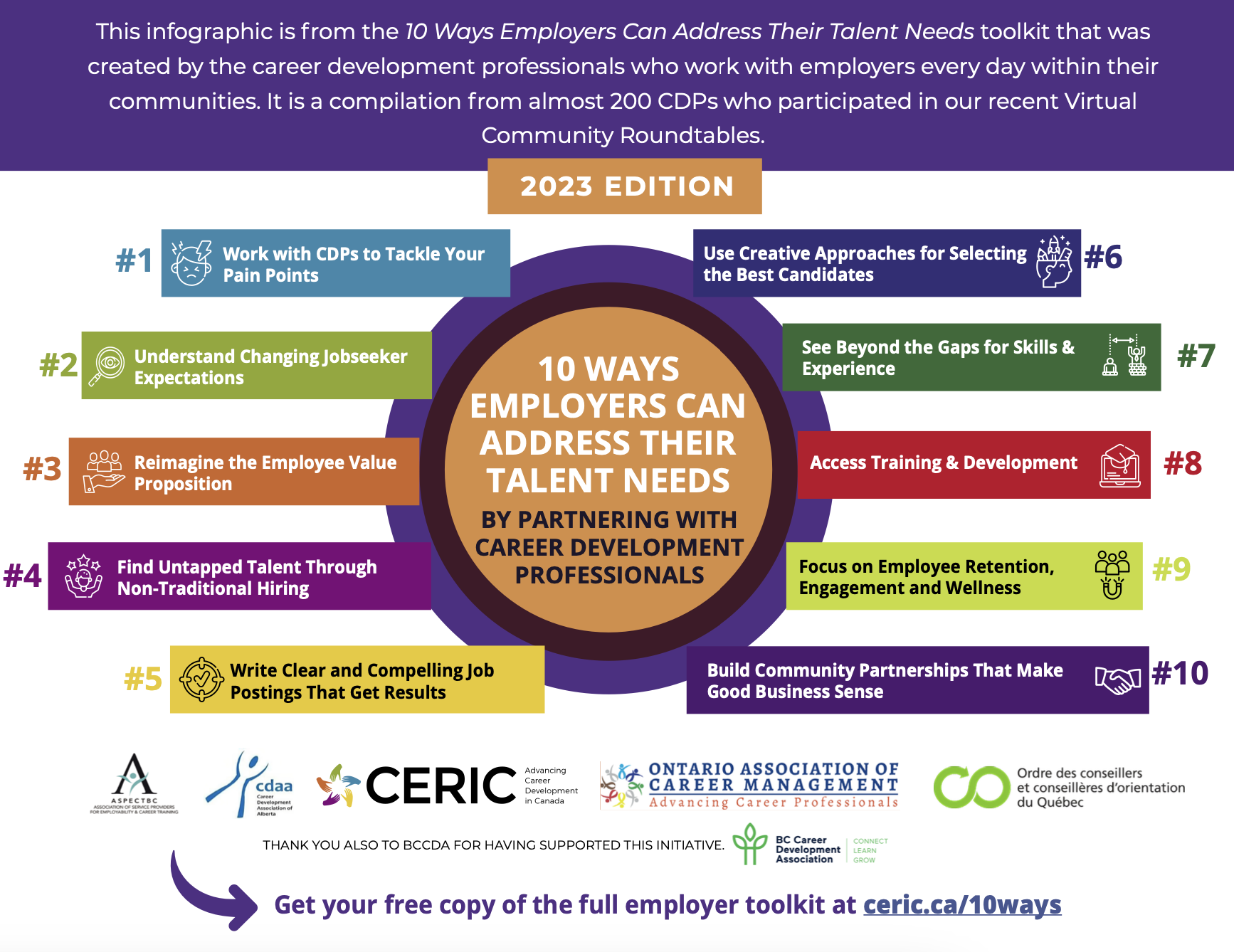
Infographic – 2023 edition – 10 Ways Employers Can Address Their Talent Needs
Toolkit– 10 Ways Employers Can Address Their Talent Needs
The 10 Ways
- Work with CDPs to Tackle Your Pain Points Get problem-solving focused support for workforce challenges including job posting writing, candidate recruiting, skills gap training and employee onboarding.
- Understand Changing Jobseeker Expectations Learn what younger workers really want: remote work options, work-life balance, mental health support, livingwages and employers who reflect their values.
- Reimagine the Employee Value Proposition Update your offerings to include flexible work arrangements, transportation support, culturalleave and family-friendly policies that attract and retain talent.
- Find Untapped Talent Through Non-Traditional Hiring Access diverse talent pools including racialized communities, persons with disabilities, immigrants and youth through inclusive hiring practices and expanded recruitment methods.
- Write Clear and Compelling Job Postings Create inclusive, effective job postings that clearly describe roles, highlight company culture, include salary information, and focus on transferable skills rather than “unicorn” candidates.
- Use Creative Approaches for Selecting Candidates Improve screening processes, design better interview questions, and explore alternative evaluation methods like job trials, shadowing and paid work experiences.
- See Beyond the Gaps for Skills & Experience Focus on transferable skills, learning ability and potential rather than perfect matches. Recognize that high-demand skills can often be developed through training.
- Access Training & Development Leverage free training resources for jobseekers and employees, including safety training, literacy programs, and workshops on inclusive hiring and unconscious bias.
- Focus on Employee Retention, Engagement and Wellness Implement career development programs, mentorship initiatives, and succession planning to reduce turnover and increase employee engagement.
- Build Community Partnerships Connect with local chambers of commerce, industrygroups and service providers to create a collaborative approach to workforce development and community growth.
How the Toolkit Was Developed
The toolkit is a compilation from almost 200 CDPs with advice for helping to mobilize local labour markets. This resource is the result of virtual community roundtables with career development professionals, held in partnership with provincial career development associations.