The seven computing disciplines are:
The field of computing has evolved rapidly in recent years, and students need better information about the field and its many related careers. Data science, AI and cybersecurity have emerged as significant forces in the computing industry, with new career pathways emerging.
The third edition of this guide (2025), produced by Mount Royal University and funded by CERIC, answers these three questions.
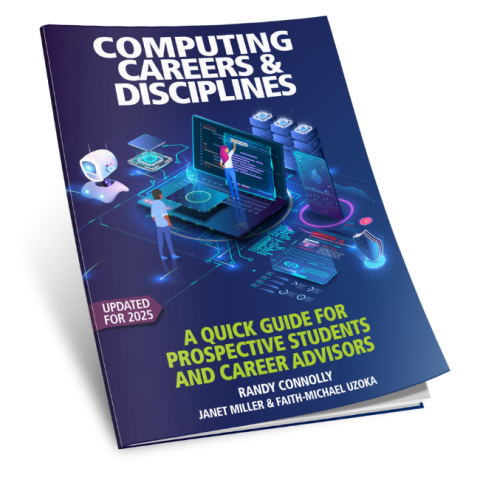
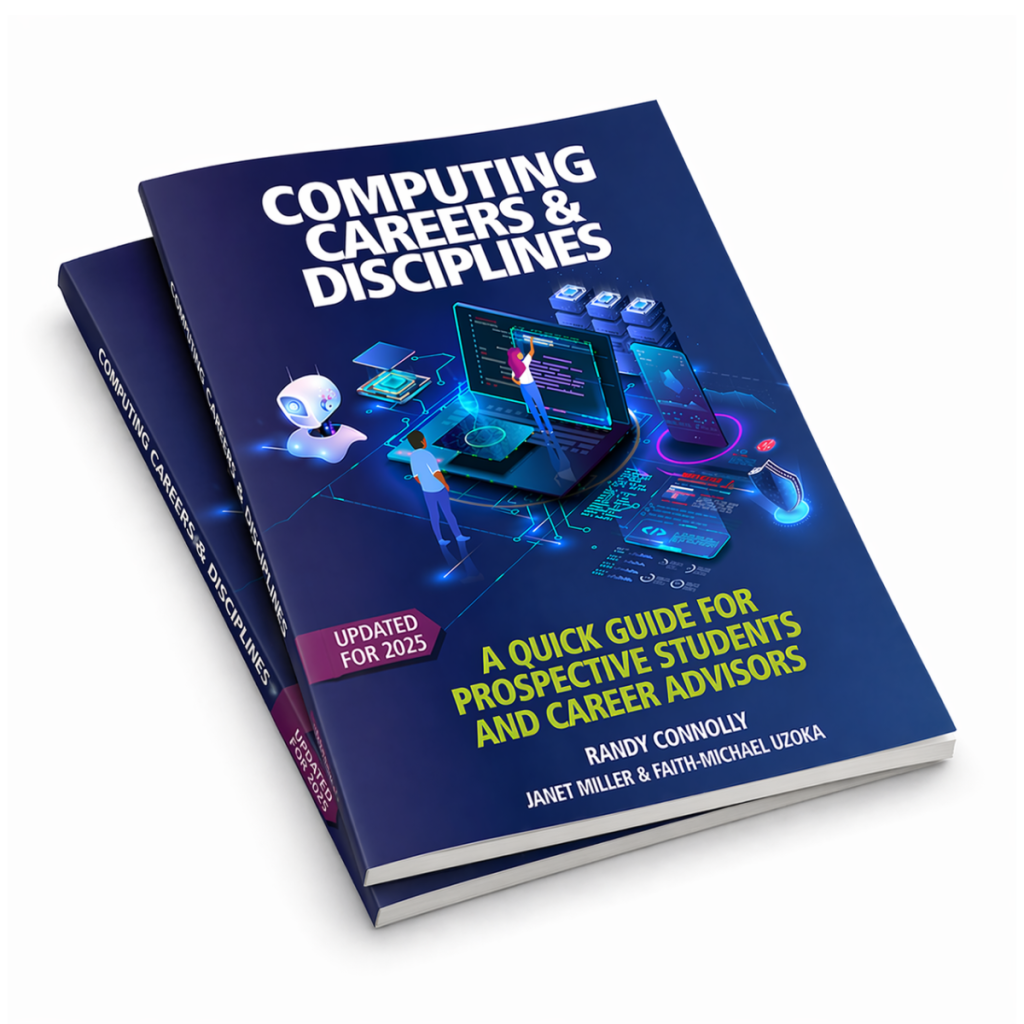
The guide outlines the seven main computing disciplines identified by the Association for Computing Machinery (ACM), as well as several other popular computing specializations. It explores how the disciplines relate to specific job titles and tasks, and lists sample degrees, core courses and other educational pathways.
The guide also touches on four other specializations: bioinformatics, network technology, game development, and artificial intelligence and machine learning.
Additionally, the updated Computing Disciplines features more content on BIPOC professionals in tech and includes additional information on educational pathways in the North.
The guide is designed to support prospective students, career practitioners, academic advisors, school/career counsellors and parents. It will help students understand the many educational pathways into computing careers, as well as which disciplines best suit their interests, talents, skills and abilities. The guide is also relevant to a broad demographic of Canadians exploring a career in the computing disciplines.
| Author(s) | Randy Connolly, Janet Miller and Faith-Michael Uzoka |
| Publisher | CERIC |
| ISBN | 978-1-988066-91-2 |
Why computing is a strong, flexible and creative career choice
The main types of computing work
The seven ACM computing disciplines and how they differ
Education pathways, sample programs, core courses and alternative credentials
Emerging specializations including AI, cybersecurity and data science
Career pathways, job titles and real graduate perspectives
This playbook is intended for leaders and practitioners responsible for workforce capability and long-term performance, including:
The frameworks and tools are adaptable across sectors, organization sizes and maturity levels.
“`

Prof. Randy Connolly has been teaching at Mount Royal University since 1997. He is the author of three textbooks, the most recent of which is Fundamentals of Web Development, Third Edition, which is used by thousands of students at over 100 universities worldwide. He has also authored over 50 peer-reviewed papers and given over 20 international research presentations. He is Editor-in-Chief for ACM Inroads magazine and on the editorial boards for ACM Transactions on Computing Education.

Dr. Janet Miller is a counselling psychologist with expertise in mental health, leadership, and post-secondary student success. In addition to working at Mount Royal University for 20+ years (as a counsellor, chair, full professor and chair support co–ordinator), Janet is an accomplished author and keynote speaker, Adjunct Professor with UCalgary, Editor of Kaleidoscope (national newsletter for counselling psychologists), and a Certified Trainer with the Centre for Suicide Prevention. Her popular book You@theU (UBC Press) aims to support students entering their first year of university.

Dr. Faith-Michael Uzoka has taught Computer Science and Information Systems at various universities since 1992. He is a Full Professor (Computing) and Research Development Officer at Mount Royal University, Calgary; and has served as Adjunct Professor in a number of universities. Michael enjoys research and innovation and has published extensively in the following areas: medical information systems, multi-criteria decision support systems, computing personnel and disciplinary studies, technology adoption and innovation. He is on the editorial board/ program committees of several computing journals and conferences. He was a Canadian Commonwealth Scholar and a Carnegie African Diaspora Fellow.
“A fantastic guide to introduce students to computing disciplines using engaging infographics. A very helpful overview of the computing professions that can serve as a springboard into career conversations around computer-related occupations.”
“Check out CERIC’s updated and very helpful guide to computing careers – it’s great for students and those of us who advise them, but also for employers who’d like to better understand the differences between various computing disciplines.”
“Fabulous resource I use with my students. Anyone interested in learning more about computing, it’s a nice easy read!”
“Thank you both for creating and providing the career world with the Computing Disciplines – ‘A Quick Guide for Prospective Students & Career Advisors.’ This was a much needed resource and is absolutely a pleasure to read, easy to work with and effective for supporting exploration. I am very excited to put this to good use with my team and my clients!”
“SO impressive – I didn’t think you could possibly improve on the last edition, but you certainly have. Kudos!”
“Thank you for the wonderful resource you funded on Computing Disciplines. It is clearly presented and will be very helpful for advisors and students. I will pass it along to many who many find it useful.”
“A huge thank you for this guide, it is super relevant and I intend to share it with our camp counsellors.”